These are notes that I am writing to help me learn our industrial history. They are my best understanding, but that does not mean they are a correct understanding.
(Satellite, the elevator was gone before 1938, let alone 2020)
The building on the left in this photo is what motivated this research.
MWRD posted A view to the west of 18th Street near the South Branch of the Chicago River on November 12, 1902.
Dennis DeBruler commented on MWRD's post
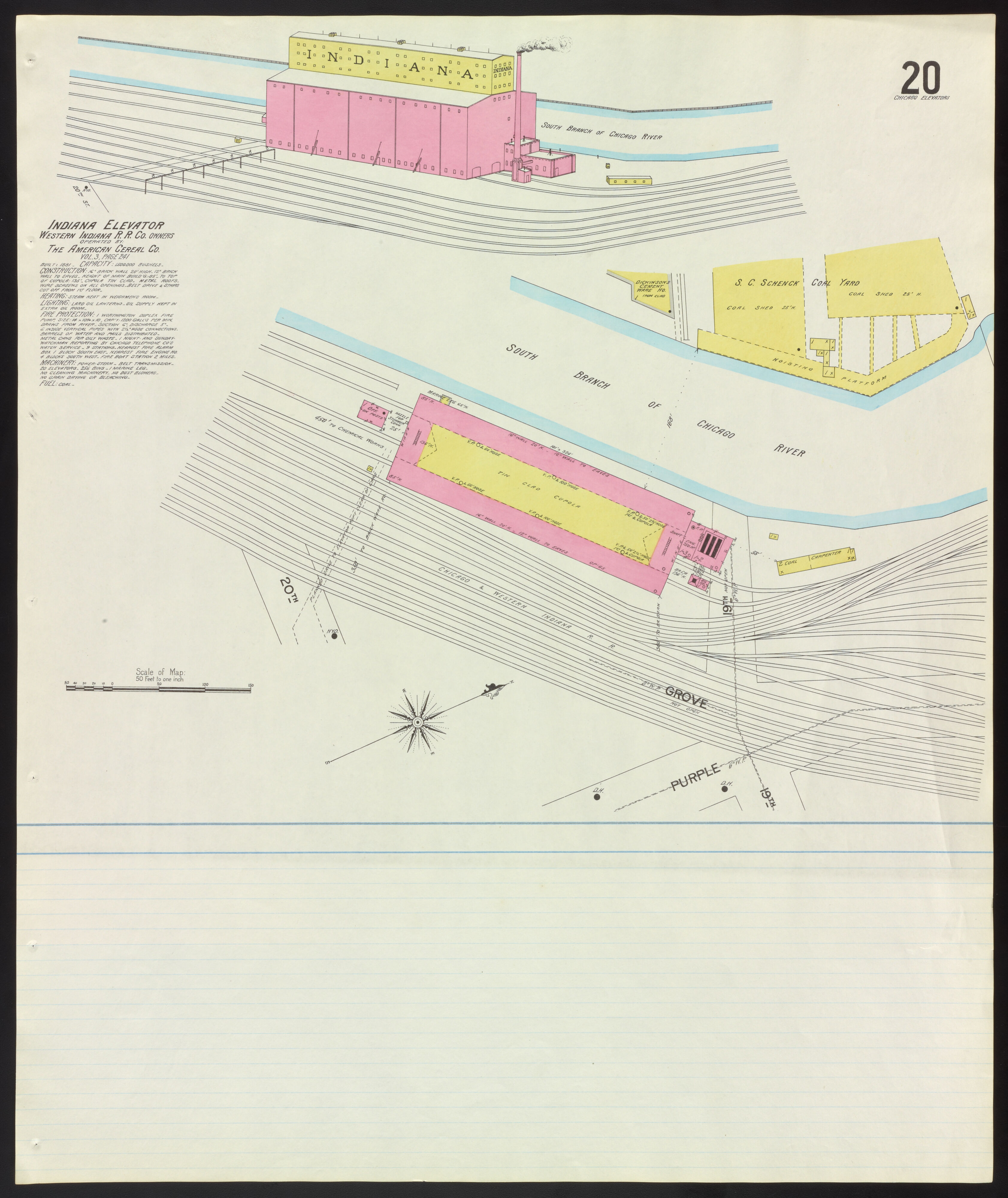
The buildings north of 18th Street were the Schoenhofen Brewery. According to this 1901 Sanborn Map, the grain elevator on the left was the Indiana Elevator. I think the truss span is over the C&WI tracks.
Dennis DeBruler commented on MWRD's post This photo uploaded by Paul Jervert confirms that the photographer was standing in the west end of the truss span over the Santa Fe tracks looking at the truss span over the C&WI tracks. The grain elevator would have been between the train and river and would have obstructed the view of the C&WI truss. This area is now the Ping Tom Memorial Park.
Al Krasauskas posted Photographic view of the former Railroad Swing Bridge over the South Branch of the Chicago River. Originally built by P. F. W. & C. R. R. (Pittsburgh, Fort Wayne and Chicago Rail Road). I believe the view is actually northeast, towards downtown Chicago. Photograph is dated 8-7-09. Paul Webb shared
Digitally Zoomed to Photo Resolution The "Quaker Wheat Berries" and "Quaker Corn Meal" signs on the end of the elevator show why the full name of this elevator is "Indiana, The American Cereal Co.".
Al commented on his post Robinson's Map of Chicago, 1886, shows that the tall structure at right was the Indiana Elevator grain warehouse and that lumber sheds were across the river, left in photo. Elevated 18th Street bridge and roadway are visible in the background.
NS 19K crosses the Wabash River in Logansport as it heads westbound on the Lafayette District.
September 1, 2024
Logansport, Indiana
Power:
NS 4135 - AC44C6M
Brian Caswell posted Norfolk Southern Train 953-18 with 8100 and 1070 (Nickel Plate Road and Wabash Heritage) Leading the Office Car Special Train - Westbound over the murky Wabash River in Logansport Indiana - This train is running from Detroit Michigan to Kansas City Mo / 6-18-25
WOODEN TRESTLE BRIDGE, completed 1883. The tallest wooden railroad bridge in the world, the spectacular Marent Gulch Bridge, was 226 feet (69 meters) tall and 866 feet long. It took 800,000 board feet of lumber and a workforce of 150 men to complete the Northern Pacific Railway bridge. Just two years later, the entire structure was replaced by an iron bridge to address stability issues and fire danger. Circled in yellow are a horse rider at the base and two carpenters on a trestle at the right. PC users should click the image to better see detail!
Marent Gulch is 12 miles northwest of Missoula on Highway 93 in western Montana. A newer bridge is still in use. The 9,000 negatives of photographer F.J. Haynes reside at the venerable Montana Historical Society.
...Look in the yellow circles. Wooden railway bridge. USA, Montana, 1883.
WOODEN TRESTLE BRIDGE, completed 1883. The tallest wooden railroad bridge in the world, the spectacular Marent Gulch Bridge, was 226 feet (69 meters) tall and 866 feet long. It took 800,000 board feet of lumber and a workforce of 150 men to complete the Northern Pacific Railway bridge. Just two years later, the entire structure was replaced by an iron bridge to address stability issues and fire danger. Circled in yellow are a horse rider at the base and two carpenters on a trestle at the right.
Marent Gulch is 12 miles northwest of Missoula on Highway 93 in western Montana. A newer bridge is still in use. The 9,000 negatives of photographer F.J. Haynes reside at the venerable Montana Historical Society.
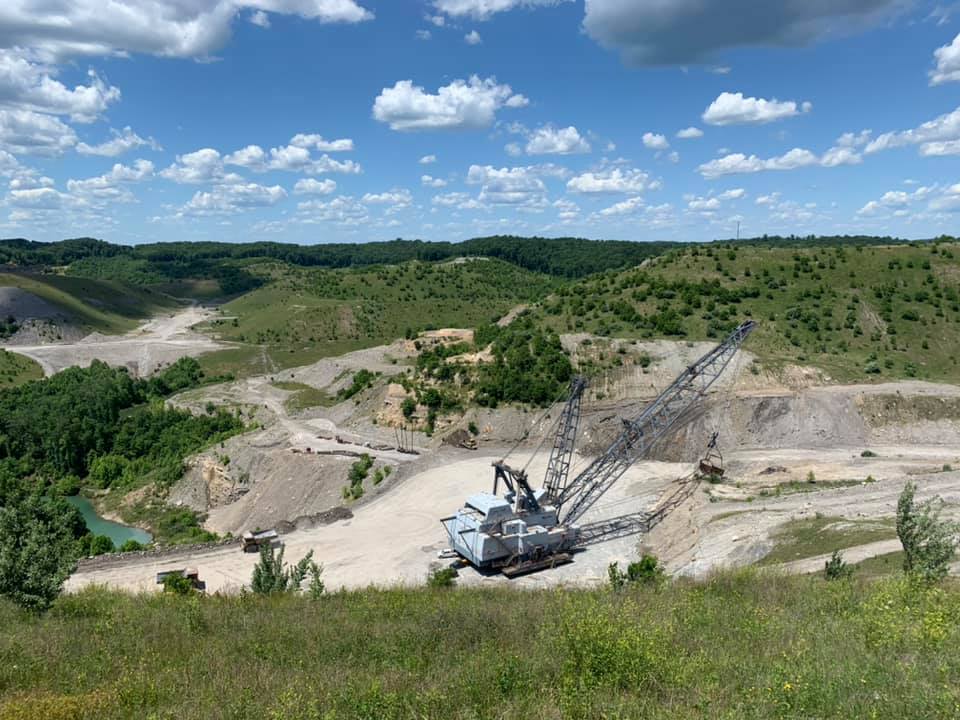
"Big John," the dragline, shoveling coal at the Samples mountaintop removal mine on Cabin Creek
[I'm glad there were some trucks in the photo to help provide scale. (Update: note the comment near the bottom of these notes that says this dragline was at Hobert instead of Samples.)]
The Samples mine covers eleven miles of the Cabin Creek Plateau. Writing in The Virginias, a 19th century industrial magazine, D.T. Ansted praised the Cabin Creek Plateau for the lushness of its natural resources, capable of sustaining populations of workers from Liverpool. In an unpublished report, the Office of Surface Mining and the Corps of Engineers found that mountaintop removal mining is likely to increase peak runoff during heavy rains. In mid-July of 2001 five inches of rain fell within several hours, flooding the adjacent hollows and valleys of Clear Fork and Seng Creek, sending houses, trailers, trees, and vehicles downstream.
WVmetronews, Jeff Jenkins Big John dragline has "walked" nearly 10 miles in its [32 year] career at the Hobet mining site. [It moves the tops of mountains into adjacent valleys to uncover coal seams. The bucket holds over 80 heaping cubic yards.]
I included this satellite image since eventually this should become greener and be harder to find.
To ship the dragline to Africa, WarFab is cutting it up and loading the pieces onto trucks. The pieces will be put on a ship in Baltimore that takes them to Casablanca.
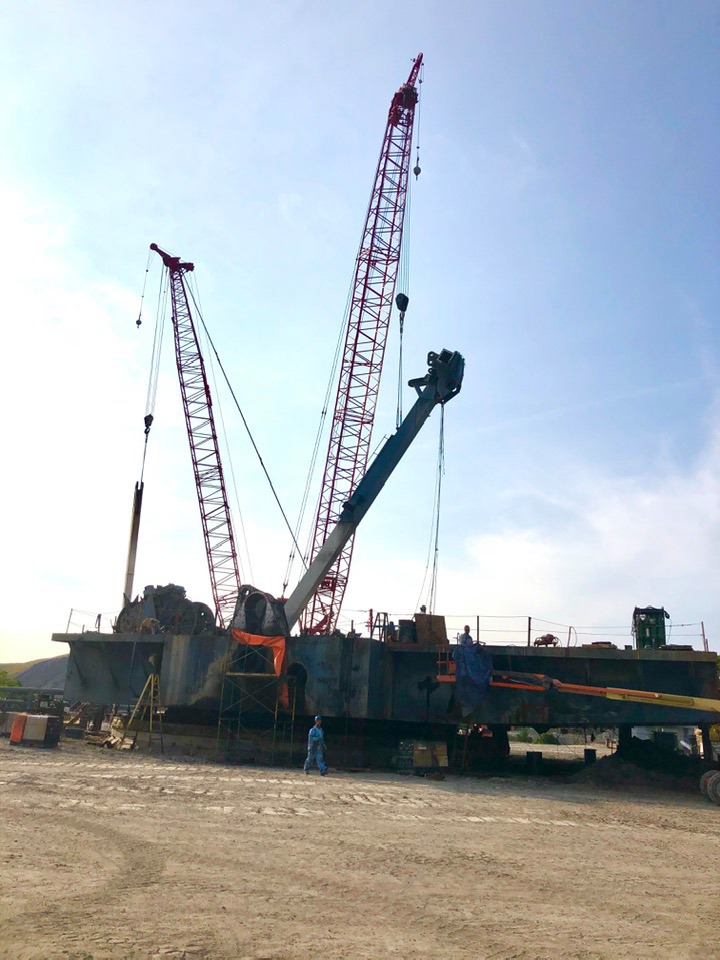
Three "before" photos that were provided by William Oldani as comments on a post.
1
2
3
Sep 23: William Oldani posted seven photos and a video with the comment:
Removing the Gantry (A-Legs) from the swing deck of Big John (Hobet 1570) this procedure leaves Only the Swing Deck an Tub. Getting the Large Pins out was a Chore!
Photos courtesy Gene Miller
Videos courtesy Justin Miller.
The Only relationship between Gene and Justin is Working with the BIG Iron!
1
2
3
4
5
6
7
Oct 2: William Oldani posted three photos with the comment: "Here’s a Good Component Break down slides for the Hoist drum from “Big John” BE 1570 Dragline. Roughly from 13 Ft to 9 Ft"
1
2
3
Oct 3: William Oldani posted eight photos with the comment:
Some Warfab Drone shots of Hobet’s Big John dismantling. We’re coming down to the wire!
Very Organized Site. Very well managed.
Drone Shots Courtesy of Tim Oldani
William Oldani: Around June 12th, site crews ( Gene Miller Project Manager) came in and started to organize part location zones. Actual disassembly started in July!
1
2
3
4
5
6
7
8
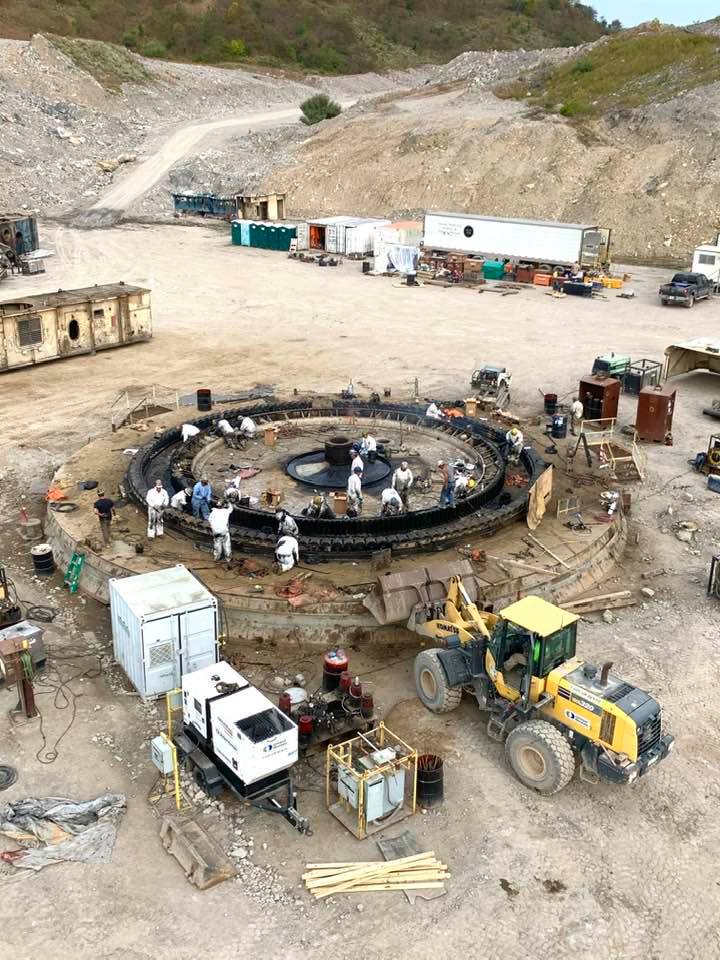
Oct 11: William Oldani posted six photos with the comment:
In a week and a half WarFab went from 75% of the swing deck remaining to completely Removed!
The Main Front Boom and Superstructure Beam was removed in on Section (Last 2 Slides) just over a 1/4 Million pounds! It’ll have to be cut in Half for transport.
Pictures Courtesy of Gene Miller
1
2 Shannon Webb: Wow....the circle looks so different from this view. Spent quite a few hours down in there cleaning grease (especially between the swingers, I was one of the only guys that fit down the hole in floor) Bob Haare: Shannon Webb I know that feeling! I was a welder at AMAX' Sunspot Mine and became acquainted with many tight spots!
3
4
5 [Triple 8s doing a tandem lift of a 225,000 lb section.]
6
Oct 17: William Oldani posted four photos with the comment: "Last Pieces of Big Johns tub (The machines Base) are being separated and many components are moving out to Be transported to Baltimore for loading on a ship for a ride across the Pond! God Speed Big John! Well done WarFab!"
Joseph Cerveny: The machine is going to Morocco next year.
1
2
3
4
William commented on his post The Rack was Shot! I don’t believe that machine could have run another full month! Jamie Kelly: WEO, that rack is 32 years old. It got over twice the normal life of a rack circle.
Oct 21: William Oldani posted eight photos with the comment: "Very Last Pieces of Big John separated and set up for shipping ! There’s still a lot of pieces on site being prepped for movement!"
Franki Shaffer: What was the boom length of Big John?
William Oldani: Franki Shaffer 325’, 66’ Tub, 74 yard Bucket.
1
2
3
4 Nick Anderson: I always wondered what these disassembly field cuts looked like. These are excellent! How wide were the cuts? Wlliam Oldani: It appeared the thicker plate was cut wider 1/2”+, while the thinner plate was 1/4”+. Nick Koba Jr.: was it machine cut or cut by men by hand?
William Oldani replied to Nick's comment This is very typical of the Track torching that was used!
5
6
7
8
William Oldani commented on a post [This is what the base looked like when it was new.]
William Oldani commented on his post Here’s Big John in his new Colors
This photo is one of three photos that was mislabeled Big John. The photo is of a shovel instead of a dragline. But I include it because it helps me understand that they did remove the tops of several mountains.
AFC 1999/008: CRF-LE-B021-03 "Big John," the dragline, loading rocks and dirt into two rock trucks at the Samples mountaintop removal site
I don't think they ran out of coal. In 1999, the US Army Corps of Engineers got caught cheating and eventually quit granting mining permits because of environmental impact issues. [youtube comments] It appears that through the magic of bankruptcies, the coal corporations are dodging pensions, health plans and site cleanup. "Today, Hobet is owned by a conservation group and no longer producing coal. The mine is a scene of rubble and retaining ponds where sycamore, pine and cedar forests once stood. Toxic runoff must be steered clear of tributaries that feed the Ohio River. A decades-long cleanup awaits....For Andrew Adkins it's a matter of leukemia medicine costing $1,200 a month. He could die without his pills, yet the health care plan for Adkins and about 800 other retired Hobet miners and their families expires at year's end. Miners who went on strike in the 1990s to protect their health plan said they never expected this....For mining families in West Virginia and beyond, a blur of Wall Street deals altered the industry's decades-old pledge to mining communities." They were supposed to restore the land to its "approximate original contour." This mine was started in 1974 using the "shoot [explosions] and shove" technique. The dragline was introduced in 1984. The last coal shipments were in 2016. The dragline had been helping with mine reclamation. [stltoday]
Looking at a satellite image, they did put some "bumps" back on the land, but they are not near as high as the removed mountain tops. But I'm guessing the bumps are good enough. Of more concern are the toxic wastes. "The weathered piles of spoil and valley fills are leaching selenium, a healthful nutrient in trace amounts but a toxin in larger doses. A 2008 study, presented in federal court, found deformed fish and warned of catastrophe, requiring a cleanup." And the slurry impoundment that marks where the dragline first started working was promised to be a wildlife habitat. [stltoday]
It appears that stltoday copied&pasted the text from reuters. But they didn't copy all of the graphics. The link is worth accessing because it has an animated set of maps showing the advancement of the "land scar" across the countryside between 1984 and 2015.
(new window) The comments have a significant amount of information. Unfortunately, many of the links are now broke.
William Oldani posted thirteen photos with the comment: "Here's an Update on Hobet's 1570-W Move to Morocco! It's been nearly 2 Years, and the Machine is 80% Complete. Mostly House Panels left to assemble."