Friday, August 26, 2016

Chicago Common Brick (Cary, Blue Island and Tuthill Brick Works)

Tuthill: (Satellite, we can still see the clay pit)

Old Chicago brick is wanted all over the world. There are companies that are basically brick brokers. They salvage the bricks from a Chicago building that is being torn down and then sell them.

(Update: the town Westmont, IL, was originally named Gregg because it started with William L. Gregg's brick making plant. There were also brick yards along the North Shore Channel.)

A PBS video about chicago common brick (source)
JoAnne Gazarek Bloom I represented a client whose old building in North Loop
made of Chicago brick that was significantly damaged by the Deep Tunnel Project. The problem was damages: It was worth more torn down & sold for the brick than it was to repair.

Carter O'Brien Fantastic piece. I was able to research our basement brick manufacturer's stamp (Brisch) to discover we have a "Polish flat", added shortly after WW2 when families with returning GIs would have a workers cottage lifted up and a new brick garden unit and foundation added; in Avondale many of these older cottages were just built on slabs, so it was a smart two-fer approach driven by a housing shortage due to war rationing of building materials.This is a very cool page showing all the nuances of how bricks can be laid in various patterns for specific advantages:https://medium.com/.../guide-to-types-of-brick...
[It takes a lot of BTUs to fire bricks. So recycling them avoids putting more CO2 into the atmosphere.]

There were so many brick buildings in Chicago because, after the 1871 fire, a new city ordinance required that new buildings in the downtown area use fire resistant materials. Fortunately, Chicago was the lake bottom of the glacial lake that was 60 feet higher than our current Lake Michigan during the last ice age. So there are significant deposits of clay that were suitable for making bricks. Several brick companies formed along what is now the North Branch Canal and dug clay pits along what became that canal. (Ogden finished digging the canal so that he would have more lake front properties that he could sell to industries that wanted ship access such as lumber yards.) The land between the North Branch of the Chicago River and Clybourne and between Diversey and Fullerton was also pocked with clay pits. William Deering filled in those pits creating an 85-acre plot in the city on which he built his Deering Harvester Company Plant(The Chicago River An illustrated History and Guide to the River and Its Waterways, 2nd Edition, 2006, David M. Solzman, p.81)

As the little clay pits in the downtown area played out and the land was reused for other applications, bigger deposits of clay further from downtown were used. Two that I have found so far are the Cary and Blue Island brick works.

BrickColecting
Note that other river towns in Northeast Illinois also had brick works, for example Streator, IL. It had four shale and clay working factories making brick, tile, and sewer pipe. When I researched the railroads of Streator, I read that the Streator brick industry flourished after the 1871 fire. One of the companies must have survived until recently because it was still on the Brick Collection history page, but the link is now broke. The invention of steel-framed buildings that allowed a lot of glass to be used in the walls for sunlight was probably a significant blow to the brick making industry.
.

Cary Brick Works


1938 Aerial Photo from ILHAP
Chicago History explains that Cary Brick Works had created a big pit digging out clay for bricks. It had also built a big tailings hill next to that pit. (In this case the tailings would be dirt, gravel, etc.) The combination of the hill and the pit provided a 285-foot vertical drop --- the highest within hundreds of miles. This steep incline was turned into a ski resort called Thunder Mountain. (I could not find the drop of Four Lakes which was made from the tailings and pit of a surface coal mine.)

I'll let you read Chicago History about Thunder Mountain, I'm more interested in the brick works. This 1938 aerial photo shows the works was between Diversey and Fullerton and between Normandy and Narragansett.

Satellite
It is now big-box and strip mall retail stores including The Brickyard and plenty of suburban style parking. What amazes me is that the track for the Milwaukee branch that went through the yard to Diversey still exists including the crossing at Grand Ave. I don't see an exempt sign on the crossing so that means school buses and trucks carrying flammable liquids still must stop traffic to look for a train that will never exist. Certainly Target and Home Depot will never have rail service. And judging from the size of the trees growing in the tracks, this building will never see rail service again.

From ChicagoTonight
The Carey brickyard actually continued in operation during the ski resort era and beyond. They made Chicago common bricks. Carey was the last place that made these bricks. The kilns needed to produce these didn’t meet modern environmental standards and Carey closed in 1980.   Today whenever a brick building is torn down, companies are brought in to salvage the bricks and re-use them. [ChicagoTonight]
.

Blue Island Illinois Brick Companies' Yard 22


Steve OConnor shared
The clay pit of the Illinois Brick Company in Blue Island which eventually the city would turn into a park. Note the small industrial steam locomotive working the pit.
Fullton Grace I believe this is the area immediately south of 123rd street between Kedzie and California. Between the Grand Trunk and B&O tracks. This clay pit at one time also connected, via train tunnel to another quarry that ran between 123rd and 119th street. It was filled in with garbage and later made into a golf course.
Mike Summa posted a photo that is overexposed.
Michael Brandt posted
The caption said Blue Island Brick Yard, I don't know but after Robert Markman found the awesome A real pic of Tuthill Building Material, change the Chimney configuration a little for more furnaces and you got Tuthill Building Material possibly.
Michael Brandt: Now they call it Riverdale and earlier Blue Island, HMMMM

Robert Markman posted two photos with the comment: "Blue Island Yard 22 Clay hole. At the time, one of the biggest in the world, and a cool picture of a clay digging machine. I wonder if one of those is at the bottom of the Riverdale Clay hole."
1

2

Mike Summa posted
Very old pictures of the Illinois Brick Yard in Blue Island, Illinois. Huge facility had its own railroad. I do not know what kind of engines they are, but feel free to describe. Pictures courtesy Blue Island Historical Society. Thank you.

Dan Quine posted
3ft gauge geared steam locomotive of the Illinois Brick Company's Blue Island quarry in Chicago.
Rick Perry: Wonder if final drive is gear or chain drive?
Nice local blacksmith built unit.

Phil Wiegman commented on Dan's post
Here is a photo of there 1953 Plymouth gas locomotive that did survive and was restored at the Hesston steam museum in Indiana. It was one of the later locomotives that replaced the steam engine. Restored 2018. From another page.

Phil commented on his comment
At the brickyard after closing. Before being saved and restored.
 
Phil Wiegman commented on Dan's post
Closed around 1980 not meeting EPA regulations on there kilns. I know much of the equipment sat for years before being scraped or sold. Had a friend that worked there in the 70s.


Steve OConnor commented on above posting

Steve OConnor commented on above posting
The fears of the residents concerning garbage being put in the old pit were well founded because pipes were added to catch the methane before a golf course was built on top of the landfill. So either the rules were changed, the commissioner of streets and electricity was bribed, or the commissioner was incompetent and the contractor got away with illegal dumping.

Satellite
The original part was the bottom part of the satellite image. The tunnel accessed clay in the upper-right part. The CN/GTW and CSX/B&OCT tracks makes it easy to locate the facility on a 1938 photo.

1938 Aerial photo from ILHAP
Kevin Piper posted a history and eighteen images concerning the 60 brick yards clustered near Blue Island.
Tyson Park There were other brickyards, not just on the South Side. There was the large Carey brickyard along the Dunning Line of the Milwaukee Road on the city's far west side which gave its name later to the Brickyard shopping center. Another large brickyard was in Glenview where north of Chestnut and east of the Milwaukee Road (now CP/Amtrak/Metra) tracks. https://www.journal-topics.com/.../how-brick-company.../
Tyson Park The Carey brickyard in the Belmont-Cragin neighborhood of Chicago was turned into a ski hill for a short period. https://www.dnainfo.com/.../thunder-mountain-chicago-ski.../
.

Tuthill


Michael Brandt posted
This is a much sharper picture of Tuthill's brick factory that was at 138th and Halsted. 138th Street to the left and Ashland Ave at the top of the picture. You can actually see some detail in this one.
Michaels description on his post of the fuzzier photo was:
"The brickyard that was at 138th Street which is to the left and Ashland Ave at the top of picture and Barr Yard to the right.It began in 1892 when James B. Tuthill started a business to manufacture and sell common brick to Chicago construction companies who were fueling the city's rapid expansion."

I did not realize that the B&OCT railyard is aa rather recent development.
1929 Blue Island Quad  @ 62,500

1953 Blue Island Quad  @ 24,000
 
Michael Brandt posted
A Clayhole in the Making at 138th and Halsted from the early 1930s, our best pic of Tuthill's Brick factory lower left( an official Grainery Brick goes to the Person who finds a picture of Tuthill's Brick factory at 138th and Halsted) That's ( Tuthill Building Material Co. )
Raymond Boerema: Tuthill Building Materials Co. was its proper title, not Tuthill Brick Factory.
Carl Durnavich: In 1931 the four area brickyards in Blue Island produced 1,500,000 bricks A DAY! In the 1930's they provided the bricks for the Chicago Post Office building expansion--the old one we drove under on the Eisenhauer.
 
David Shilling posted
Photo is just missing H&H, but is a good view of the clay pit, both RR yards, and the Acme peninsula.

Carl Durnavich commented on David's post
Great find! Guess "41" may mean 1941? We don't see the Halsted Outdoor Theater, which opened in the late 1940's, but see the Pipe 'O Peace golf course, which opened in 1928. So maybe 1941. Here's a labeled view of Dave's find. Guess the "runway" Bill Urbon mentions is the long, brick factory building in the clayhole.
David Shilling: The 41 is the sequence number of the photos. I think the photo is the 1920's or 1930's. I found it here: https://www.flickr.com/photos/barrigerlibrary/page449
Also, that long strip to the river shows up in a lot of aerials from that era. We have discussed some ideas of what it was. Maybe a canal or short rail line used to transport materials to the river? Maybe a way to pump out the groundwater from the clay pit?

Michael Brandt posted
A shot of the Barr Yard and a very rare shot of Tuthill's Brick Factory at 138th and Halsted in background.

10:18 Tuthill Company History Video


Update:

David Daruszka commented on a posting:
Purington was located just south of 119th Street between the two Rock Island lines in Blue Island. The clay pit was eventually filled in.
From a history of Blue Island:
BrickyardsAfter it was discovered in the early 1850s that rich deposits of clay surrounded the ridge, Blue Island became the center of a significant brick-making industry that lasted for over a century. In the early years, these efforts were small, with the bricks being made by hand and the turnout created mostly for local use, but by 1886 the Illinois Pressed Brick Company (organized in 1884) was employing about 80 men and using “steam power and the most approved machinery”, which allowed them to produce 50,000 bricks per day.] By 1900, the Clifton Brickyard alone—which had opened in 1883 under the name of Purington at the far northeast corner of the village was producing 150,000,000 bricks a year. In 1886, the Chicago architectural firm of Adler and Sullivan designed a large complex for the Wahl Brothers brickyard (the main building of which was 250 by 350 feet on the west side of the Grand Trunk tracks between 119th and 123rd streets. These buildings had been demolished by 1935, and all of Blue Island’s brickyards were re-purposed by the latter part of the mid-20th century. The larger ones for a while become landfills, and the Wahl Brothers location is now the site of the Meadows Golf Club
The Nov. 24, 2016, issue of the Chicago Tribune had big article on brick collecting in its A&E Section. Part of an introductory paragraph is of particular interest:
Chicago --- rich in clay deposits used for brick-making, having burned down in 1871 --- was a ripe canvas, rebuilt as a brick metropolis. By the 1890s the area boasted more than 60 brickyards, clustered near Blue Island; manufacturers pumped out 600 million bricks a year. Before the industry peaked in the 1920s, before steel and concrete competed for attention, Chicago had become an international hub for brick production.
In addition to the brick collecting link near the top of this posting, the International Brick Collectors Association has an official and a member's sites.

Some farming firsts

This list of five firsts is from the perspective of CNH (Case, International Harvester, Ford and New Holland) so you won't see items like the first self-scouring steel plow (John Deere) or the first live (independent) PTO in 1946. (Cockshutt hired two engineers from Oliver so that they could scoop Oliver by 6 months.) I normally provide a link for my source, but it looks like the URL is not permanent. (Update, the link is working again.)
1
Sperry New Holland launches the first self-propelled forage harvester in 1961

2
International Harvester introduces the revolutionary Axial-Flow combine in 1977. ​This greatly improves harvesting efficiency through its revolutionary rotor design

3
​​​​New Holland invents the first self-tying pick-up baler in 1940
.
4
​A part of New H​olland Agriculture history​: the first mass produced tractor, the Fordson Model F, is built in 1917.

5
​​Case produces the first steam-powered tractor in 1869. ​​

Because the pictures might be temporary, I'm saving the other three they posted.

8

7

6
Update:
Horsepower posted
Some of the video links they posted about the announcement: 8:00 min, 2:26 min, 2:27 min, 2:24 min. A web page about driverless technology. They do expect farmers to build private paths on their farm so that it can get from the barn to the fields.
CaseIH "high-efficiency farming" topics other than autonomous tractors.

Octane Press posted four photos with the comment:
In a secret garage, IH engineers started working on the new project. The team began in the late 1950s, thinking they’d need a few years to design the combine. In the end, the machine was released almost 20 years later!
Tap the link to learn more about the Axial-Flow Combine! 
📷: Lee Klancher and Wisconsin Historical Society from 📕: "Red Combines"
Seth Wengert: I've been told that when they demo one at Farm Progress show, they had locked doors that closed off the rear so the no one could see in the new threshing system.
When you think about it, these were so far ahead of everyone else it wasn't even close. It's shocking since IH was usually ten years behind or more...
Christopher Richter: The old Minneapolis Moline corn shellers were rotary so the technology existed for almost 50 years before it made it to a combine.
Steve DeArmond: I didn’t understand why it didn’t have separate hydraulics for the drive wheels blow a small hose on the thrashing equipment you don’t know it till the machine stops the John Deere had it separated.
Rick Butler: Much of the early Axial Flow development was done in Fort Wayne at the IH truck plant.
Don Amber: Rick Butler and wasn't it painted blue?? I remember hearing a story about that from a guy that worked in the engineering area.
Rick Butler: Don Amber IDK about that, but anything is possible. I stumbled onto a great YouTube video about the history of the Ft Wayne plant and the combine development was mentioned.
[And there are some comments about IH (red) vs. JD (green).]
1

2

3

4
lll
Comments on the above post

Steve Walters commented on the above post


And a Massey-Ferguson "rebuttle," 3:15 min.

Massey-Ferguson's review of their history: 4:07 min

Another CNH video: 8:00. Starting at 6:10, it presents some history. At 6:12 is "grampa's" baler.

A Facebook posting where the comments discuss which year the other manufactures introduced their axial rotor design, including:
Justin Hiner Jared, Case never built a rotary, International did. Sam, international wasn't behind everyone else as tractor house will show you. New Holland had rotaries on the market in 1975, Gleaner in 1976, International in 1977, White in 1978, John Deere in 1998.
Linda Chamberlain White was in 1979, but marketed in 1980.

10 Significant John Deere Milestones, note that John Lane is the inventor of the self-scouring steel plow.

175 Anniversary CaseIH video of its history

John Deere video with tractor timeline and PR (I wonder if JD saw the CaseIH video and decided they had better get something on Facebook also.)


Wednesday, August 24, 2016

Iowa, Chicago and Eastern Railroad


Slambo put the image in the Public Domain
IC is not the only railroad that sold a route and then later bought it back (Chicago, Central and Pacific), the Canadian Pacific sold some of the routes it got when it bought the Milwaukee Road in 1986 and then later bought those routes back. Specifically, CP sold it to I&M Rail Link (IMRL) in 1997. But IMRL could not make a profit with the line so they sold it to Iowa, Chicago and Eastern (ICE) in 2002. IC&E not only made a profit, it grew the business. It was part of a purchase made by Canadian Pacific in 2008. (Wikipedia1, Wikipedia2)

I learned of this railroad from a Flickr photo. More locomotive pictures and info is available on American-Rails.

Tuesday, August 23, 2016

IH: Headquarters, Proving Grounds and St. James Farm

Fred Bowman posted
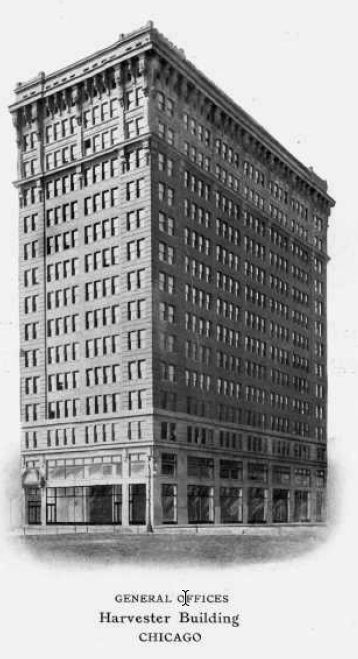
600 South Michigan as viewed from Wabash. Originally Headquarters to International Harvester, its now home to Columbia College, who I might add, helped restore much of the detailing. 
By Christian Eckstorm in 1906 in a neoclassical style
According to Columbia College, this 15-story skyscrapper was "a modern skyscraper of its era, built with a steel skeleton, high-speed elevators, electric light, the most advanced mechanical systems available and a floor plan designed to maximize natural light for all of its interior office spaces." It was purchased by Fairbanks-Morse Company in 1937 and by Columbia College in 1975.

Update:
1909 Annual Report, last page
While standing in line in Springfield, IL in the Abraham Lincoln Presidential Museum, we started talking to the man ahead of us. He mentioned that the headquarters of IH used to be at 180, then 401, N. Michigan. (McCormick's first plants in the Chicago area was north of the Main Branch of the Chicago River on the east side of Michigan Avenue.)

The current headquarters for Navistar, 102+ photos    Alcatel-Lucent/Lucent Technologies/AT&T used to have this building as the headquarters of their Western Electric operations.
The current headquarters for CNH, 10 photos

Satellite
I went to the CNH headquaters to take photos. See my comment below concerning my experience with the receptionist. You can find more photos on Google Map than I could take there in person. Maybe making a comment about going to see John Deere's three visiting center hit a nerve because I see they now have a token display of a red CaseIH and a blue New Holland tractor parked out front.

Wilson Farms posted
[Farmall Plant]
Martin Rickatson I’m heading to Burr Ridge tomorrow - hope to be able to post a current photo of this tractor.
Dennis DeBruler Are you a dealer? The receptionist told me they had a museum, but only groups of special people can see it. I'm certainly not special. They would not even let me take pictures of the displays in the entry lobby! I guess I'm going to have to visit John Deere's three visitor centers instead.
Martin Rickatson I’m a farming writer/journalist from the UK coming over with a group of dealers and customers. I’ll be there in the morning so look out for some photos.
[Feb 2019: I did a search for "Martin Rickatson" hoping to find his followup photos and I could not even find this post. Bummer!]
Tim Crowe posted two photos with the comment: "International Harvester Research Center, Burr Ridge, IL. Just south of Hinsdale. Long gone now. I grew up very close to it. Now there are McMansions on that land."
[I see this was always just farm equipment. I wonder where they tested their trucks. At the existing Navistar's Proving Grounds?  I have passed those grounds more than once, but all you can see from the road is a sign, a fence and a bunch of trees.]
Chuck Moroni They also had secret test farm out to the west by Norway in where they would put all kinds of there tractors and the competition through destructive testing.
Dennis DeBruler That facility is still there. In fact, it is now the CNH headquarters. But, looking at the satellite image, I see they still have proving ground facilities west and south of the building. It is now landlocked by McMansions. https://www.google.com/.../data=!3m6!1e1!3m4!1sWig...
[There are some comments about other lost IH facilities in the Chicagoland area.]

1

2
These notes are becoming IH misc.

One of  17 photos posted by Steve OConnor
All that remains of the two giant factories of the International Harvester plant at Blue Island and Western in Chicago (5,000 employed) and Deering's north side factory (7,000 employed) now reside at St. James Farm Forest Preserve in Warrenville. For decades, though, the property was the retreat of the McCormick family. Chauncey and Marion McCormick acquired the initial 203 acres in 1920. Chauncey was the great nephew of Cyrus McCormick, who invented the first commercially successful mechanical reaper and in 1851 co-founded the McCormick Reaper Works, which merged with the Deering Harvester Company in 1906 to become International Harvester Corporation.
To accommodate their interest in horseback riding, the couple built a colonial-style brick stable with stalls lined with wood and iron posts from England. To support their growing award-winning herd of Guernsey cows, they constructed a state-of-the-art dairy barn with roomy stalls and assorted outbuildings. For the better part of two decades, the buildings housed a dairy operation that was a benchmark for farmers throughout the Midwest.
In the late 1950s, the property passed to the McCormicks’ son, Brooks, who managed the estate with his wife, Hope. They built the estate’s indoor arena, which not only accommodated their black-tie events but also later served as the St. James Riding School for the Handicapped, one of the McCormicks’ charitable interests.
After his retirement from International Harvester in 1980, Brooks began to aggressively develop the estate’s renowned equestrian facility, which grew to include a 62-stall stable for competitors’ horses, a 1.5-mile steeplechase track, a 200-seat concession area and dressage and jumping arenas. St. James Farm hosted several international eventing and dressage competitions and an annual steeplechase race, which drew up to 14,000 spectators and raised funds for the Marianjoy Rehabilitation Hospital.
In 2000 Brooks McCormick sold the 607-acre St. James Farm to the Forest Preserve District of DuPage County, retaining a life estate that gave him the right to live on the property until his death in 2006. In July 2007 the District officially took possession of the property. We visited St. James Farm for the first time today. 10-27-2019.
[So the forest preserve has at least two former horse estates. The other is Danada.]
Octane Press posted
Testing, designing, and photographing of IH machinery was often done on the company grounds in Hinsdale, Illinois. IH had a large research center and a working farm in the area.
Tap [or click :-)] the link for more of Farmall's deep history in Hinsdale in this week's Saturday Speed Read!
 https://buff.ly/3ZIOqvp
Doug Lawrence: Apparently they know nothing about farming. Running over the windrow and not a spec of dust on the equipment or the farmer who is wearing a “white” hat without a spec of dirt or dust.
Joe Scheller: Doug Lawrence have to start out with clean clothes and the dust don't start till the first thrashed gets to back end if combine. As for driving on windrow that one has been done already just waiting for the baler. [Judging from some other comments, Doug Lawrence has a history of "stupid comments."]
[Given that the combine is PTO powered, I'm surprised they are using an H instead of an M. Maybe that was the test --- to see what an H could do when it is stressed.]
Joe Scheller: That must have been a challenge to run a combine without live PTO.
Tommy Carter: Joe Scheller not so much, you developed the knack of quickly depressing the clutch, engaging the pto and releasing the clutch before forward motion stopped. Ran tons of pto equipment with an M.
[Back then, the clutch controlled the PTO as well as the drive. Around the 1960's live or independent PTO was introduced. Specifically, the clutch did not stop the PTO. The PTO had a separately controlled clutch. Tommy must be describing the art of starting a PTO implement. The issue I remember was when a big clump of material entered the implement. You had to disengage the clutch; shift into neutral; re-engage the clutch to run the clump through; disengage the clutch; shift into, a possibly lower, gear; and then re-engage the clutch.]
Samuel Phillips: Seeing those front wheels and the large steering wheel...I recall you didn't want to hit a badger hole if you were not holding the wheel like this man in the photo with both hands. [I.e., no power steering.]


Monday, August 22, 2016

Ewing Avenue (92nd St.) Bridge over Calumet River

(Bridge HunterHistoric BridgesChiucagoLoopBridges3D Satellite)


View from 95th Street Bridge
 
20160504,21 3270

(Update: the information concerning Zimgibil's grave has been moved to these notes.
Several more of my photos and a video are here.)

It is easy to find a place to park because Ewing is a four lane road that has to use a two lane bridge. But I didn't get my act together in time to take a video of it going down. By the time I got out on the bridge, the three sailboats for which it was raised were north of CN/EJ&E Bridge. But later I did get a video of another batch of boats leaving the river. Unfortunately, that video taught me about wind noise.

"Built 1914; rehabilitated 1992 and 2013" [BridgeHunter]

"This bridge was one of the first city-designed bascule bridges to use a counterweight composed mostly of concrete rather than cast and pig iron as had been used in earlier bridges....The bridge operation was achieved by two 75 h.p. electric motors. When completed, this bridge, with a 200 foot clear span, had the longest clear span of any bascule bridge built by the city at that time. At that time, this bridge was the main route to Chicago from eastern states, which made this a very important bridge. Given this importance, it is unsuprising that a temporary bridge was in place to serve traffic during the construction of this bridge. The temporary bridge was actually the superstructure of the former bridge at this location, which was simply moved onto a temporary substructure placed a short distance north of the bridge. This previous bridge was a hand-turned iron swing bridge, constructed at an unknown date, and was 200 feet long and 34 feet wide." [HistoricBridges]

Rod Sellers posted
Where am I?
George Dosen Don’t remember those power line towers.
Bob Lalich George Dosen - the transmission line towers seen in the photo were replaced by the currently standing towers in the late 1960s.

Rod commented on his post
South Chicago Ewing trolley crossing 92nd Street Bridge view east toward the East Side. Youngstown Steel partially visible at left. Attached photo was taken from the other side of the river and shows trolleys waiting for boat to pass.
1947

Rod Sellers posted
Answer to Apr 30 "Where are we?"
92nd Street Bridge, Ewing Avenue, Trolleys, June 28, 1947
Pretty much 4 possible answers. Only confusion is that sometimes this bridge is called the Ewing Avenue Bridge and sometimes the 92nd Street Bridge. All Southeast Siders have their own memories of bridges, probably in connection with being late to engagements or having to take circuitous detours to avoid an open bridge. On the Southeast Side the word bridge is often a verb as in “I’ve been bridged."

Update:
1 of 4 photos posted by Stephen Sostaric 
Alpena made a sunny afternoon arrival in Chicago today - April 21, 2023.

Tom Shepherd posted
Here is an excellent aerial shot of the Calumet River as it enters from Lake Michigan at roughly 92nd Street.
On the right side of the river (south side) is what is now the Illinois International Port District's Iroquois Landing facility.
On the left are the remains of where US Steel (USX) once was.
Notice the breakwater out in the lake. See the barges being towed by a tugboat, which just came through the opened-up 92nd & Ewing Ave. bridge?
This photo (date unknown, maybe around 2000?) was before the extension of South Shore Drive through the USX / Lakeside Development property.


Rod Sellers posted
92nd St Bridge view west toward South Chicago.
Bridge was a hand operated swing bridge replaced in 1914 with a trunnion bascule bridge.
[A different exposure of this photo]
 
Rod Sellers posted
92nd St Bridge (also called the Ewing Avenue Bridge) c1912
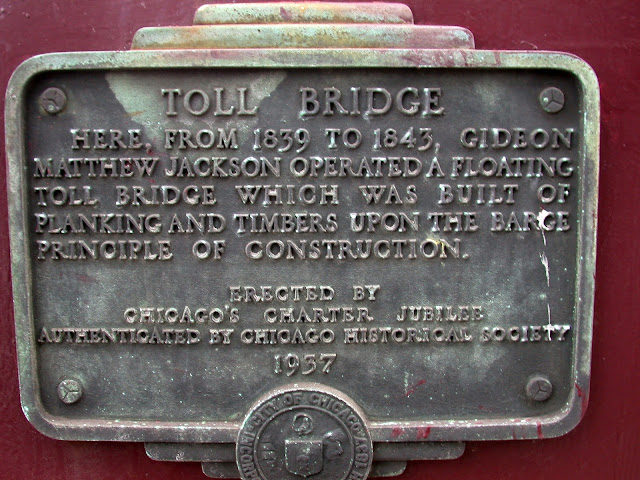
Bridge was a hand operated swing bridge replaced in 1914 with a trunnion bascule bridge. In 1839 this was the site of a floating toll bridge.
Rod Sellers: Another question - is this view looking toward Lake Michigan or looking up the Calumet River?
Jim Harter: Looking up the rivetr.
Rod Sellers commented on his post
Plaque on 92nd Street Bridge.

Bob Lalich commented on Rod's question about the direction of the view
The CFD had a station on the east bank of the river. The view would be looking toward Lake Michigan.

Rod Sellers posted
92nd Street Bridge.
[The 1914 bridge mentioned above.]

Michael Mora posted
92nd & Ewing bridge
https://thetrolleydodger.com/

Christy Matczak Boyle posted eight photos with the comment:
January 1981. My mom was allowed under the 92nd Street bridge to photograph some work being done. She was soooo happy!
 Christy Matczak Boyle They warned her about climbing under and she said “don’t worry, I can swim”


1
[Note the CN/EJ&E Lift Bridge in the background.]

2

3

4

5

6

7

8

safe_image for Lou Gerard Flickr

Ships Passing-3

As the Manistee goes through 92nd St. the G tugs Massachusetts and Florida move in to take the Algowood out to Calumet Harbor so they could bring in the Atlantic Huron due to tight clearances. I had to go to a lunch appt. so couldn't stick around for the Huron.


Nick Hart posted
With a load of stone for Ozinga, Interlake's Herbert C. Jackson is seen making way through 92nd/Ewing on the Calumet River. July 9th, 2022